Drones have been increasingly used in wars for years. In fact, they've been used so much for warfare that it seems like drones make war easier. The Upfront article, "Invasion of the Drones" by Patricia Smith is about the ubiquitous use of drones, not only in wars, but also for delivering pizza and taking pictures of homes for real estate companies. In the article, Patricia Smith talks about the three main concerns for the use of drones in society. Privacy, safety, and warfare are three concerning topics that pop out when the usage of drones seemed to have too far. Additionally, there is evidence that these three problems can affect normal people. Moreover, I do not believe that drones should be used for things like deliveries, pictures, etc.
Drones have been posed as a threat to a person's privacy. These drones can be made with built in cameras, and can take pictures of unsuspecting people that mind their own business. For example, in the article Patricia Smith stated that drones were used by almost everyone, from farmers, to scientists, and police, the use of drones is increasing all around the world. This provides a great deal of concerns with the Fourteenth Amendment, which offers protection from "unreasonable searches and seizures." In this case, many people do not know when or where a drone may be hovering above them, which raises the question, "Does that constitute an 'unreasonable search'?" Secondly, safety has also been a widely varied concern. There has been many issues with drones getting "out of control" of their operators. "Flyaways" are drones that escape through their operators control and may crash due to software glitches, operator errors, and wind gusts. According to the article, these drones are likely to crash into buildings and trees. In another scenario, there have been dozens of incidents where drone and planes have "near misses", several where at airports in New York, Washington, D.C., and Los Angeles. This can put many people on the planes in harm's way. Lastly, drones have been used in wars very easily. In fact, the president can use a drone for attacking enemy locations without Congressional approval. It is said in the Constitution that the president is in charge of the military, but only Congress can declare war. Many fear that drones have made war seem more like a video game than a life-or-death situation. To add on, the usage of drones has been an upbringing of many concerns for the society's privacy, safety, and the ruling of the Constitution.
I believe that drones have been misused in public, and the experimental usage of drones in jobs like pizza delivery and real estate should be put to a stop. This is because, when drones are used for jobs like delivery and more, it decreases the number of jobs for a person. Someone who has been working as a delivery man may not be needed because he can be replaced by a drone. Also, the thought of drones flying around, unseen, makes people feel uncomfortable, and I don't think I would be comfortable in the situation either. However, I disagree that drones make war seem too easy. I think drones should still be used for attacking very dangerous terrorist locations, and they should be used for war. I think this because I realized that by using drones as a replacement for soldiers, and actual people in war, can actually save lives while also destroying the enemy. Furthermore, I feel as though the usage of drones in wars should continue, however I believe that usage of drones for simple jobs, like taking pictures of a house, should end.
"Your
beliefs either pave your way to success or block you."
- Marsha Sinetar
People
have many different beliefs. Some believe in God, others don't, and others
believe in many. Truth is, we all have something we believe in. Whether it's
freedom of speech, or racial freedom, we have our own
way interpreting things. "The Book Thief" by Markus Zusak
is a searing and haunting book set in the period of the Nazis when Jews were
considered discrimination among others. A little girl, Liesel Meminger,
discovered "The Grave Diggers Handbook" soon after she lost her
younger brother, and shortly afterwards, her mother. Since then, she has had to
start her life over with completely new people where she battles against her
rights and her wants. Throughout the story, there are certain events that
change Liesel's beliefs on various things, and throughout the story I have come
to a realization that those changes are good and meaningful.
Death has
been a big influence on Liesel and her beliefs on life. As a child she lost her
brother and her mother and soon she loses many other loved ones. In the story
Liesel states “It kills me sometimes, how people die.” (464) She was reflecting
on her brother and her mother (who has not died but is practically dead to
her). Throughout the story, the narrator reflects on Liesel’s thoughts. To this
he replied “You see, to me, for just a moment, despite all of the colors that
touch and grapple with what I see in this world, I often catch an eclipse when
a human dies. I've seen millions of them. I've seen more eclipse than I can
remember.” (11) The narrator implies to have seen Liesel’s brother slowly die,
and her mother fade away from her side. He implies to have witnessed many
deaths. Her brother’s death changed Liesel to recognize that no matter what,
life moves on. She decided that she had no choice to move on with it. This was
really surprising to me because Liesel was only 9 years old when this occurred,
yet she had the will power to start over in her life. In another scenario,
Liesel witnessed the death of her best friend, Rudy. That one moment made
Liesel realize how much she loved him, and how she should have told him when
she had the chance. It made her realize that in life, she has no one but
herself. It changed her belief of depending on others for things that were
important to her. She grew strength and courage to move on. The narrator, who
was a witness, stated “It amazes me what people can do, even when streams are
flowing down their faces and they stagger on, coughing, and searching, and
finding.” (535) Liesel showed me how strong people can be, she realized, and
helped me realize, that death can have a strong influence on people. To
conclude, I believe Liesel has been through a lot, and it amazes me how she can
be strong enough to start over.
“The Grave
Diggers Handbook” is also a big reason for Liesel’s changes in beliefs. The
book holds a deeper meaning, it held the memories of her brother and her
mother, and the last time they saw each other. Because of the book her life
changed deeply. Firstly, it gave her the motivation to learn. She did not care
much for it at first, but after she found the book, she longed to learn and
read every single word in it. Secondly, the book drew her closer to her foster
father, Hans. He taught her how to read and write, and soon their memories were
stored in that one book. In the story, Markus Zusak states, “The book. The
words. Her fingers were bleeding, just like they had on her arrival here.” (534)
Although, it is pretty clear on Zusak’s intentions on these three sentences; I
believe it is referring to the first time Liesel found the book. Her fingers
were bleeding (from digging for her brother in the cold snow) and she
discovered the book only moments later. The book holds her aspiration for
education and her growth in it too. Moreover, I believe the “Grave Diggers
Handbook” has great significance in her changes in beliefs in education.
Moreover,
throughout the story Liesel’s beliefs on life and education changed, and the
narrator reacted in very astonishing ways. As life goes on, Liesel helped me
realize that, we will not have time to look back unless we feel it is the right
thing to do. Sometimes we just have to move forward in life no matter what
happens. She also taught me that education and knowledge are powerful things
that can come to many uses in the future. Sometimes, knowledge can be the care
taker of all your memories. Moreover, I have learned that in life, when seeking
education you are sealing away the past and gradually working towards the
future, as did Liesel in “The Book Thief”.
"The secret of change is to focus all of your energy, not on fighting the old, but on building the new." - Socrates.
Change doesn't always have to be a bad thing. In fact, whether or not the change you seek is deemed good or bad is based entirely on yourself and how you build on the change. The book "The City of Ashes" by Cassandra Clare is the second book in the Mortal Instruments series. The book is based solely on the shadow hunters Clary, Jace and Clary's friend Simon. Throughout the book the characters Clary and Jace fight through a battle with them selves, the people they love most, and those they wished they didn't care so much about. They meet new people, and discover more hidden secrets about there past life, and all throughout this book, every single important event changes them in some way.
Identity, or in other words, discovering who you are and what you want are events that can change anyone. Many times the people around you can help reveal a part of yourself that was hidden, however, sometimes no matter how much the people around you reveal, your true self remains hidden from you. For example, in "The City of Ashes" it states, "Somebody's girlfriend," she said. "Somebody's sister, somebody's daughter. All these things I never knew I was before, and I still don't know who I am." (83) In this sentence, Clary is looking back at the two major secrets that were relieved to her. To add on, this event changed Clary in a good way. It helped Clary realize that no matter how much is revealed to her, she still knows less. She realizes that no one knows her inner self, not even herself. Moreover, I believe that we all get days where we feel as if we are drifting away from ourselves. As if no matter how much we thought we knew about ourselves in the past, as times goes on and such events come that changes us and opens our eyes, we actually don't know what we are capable of and who we are as human beings.
To understand yourself, you need to accept reality. Many people deny reality when they want something they know they can never have. Like Jace, in "The City of Ashes", many people believe that if they deny something long enough, it will disappear. However, the fact is, in reality things don't work like that. So the best things to do is accept its existence. For
example, in a conversation between Jace and Clary, Jace stated “When I was a
little kid, I realized that if you say any word over and over fast enough, it
will lose its meaning. I’d lie awake saying the words over and over to myself-”
to this Clary replied, “It doesn't matter how many times you say it. It’ll
still be true.”(200) additionally, as you can see, reality is something that is
underestimated by even the strongest of people.
Sometimes,
discovering who your real family members are can change you. It can break your
heart, and open your eyes to clearly see the relationship you have with others.
Because of this book, I learned that the people I hold close to me are my
family, it doesn't matter that we don’t have a blood connection that ties us together. As Clary said “Family is more than blood. Valentine isn't my father.
Luke is. Just like Alec and Max and Isabelle are Jace’s family. If you try to
tear him out of your family, you’ll leave a wound that won’t ever heal.” (62)
When you are separated by those who are you hold close, or your close
relationship with them is threatened in any way, that is when you begin to
realize that those people are your family. It is at such a moment that you
realize the strong bonds you created with others. It changes you to fight for
all those bonds, to tie all those stray ends, and to make sure that the wound
of loosing “family” is vanquished. In other words, family does indeed change
people. They influence you, they motivate you, they anger you, and many times
they break you. However, if the scar they leave behind does eventually heal, it
is because along with changing you, your family changed itself.
Along with family
comes trust and love. To love someone you be able to trust them with all your
heart. To be loved by someone, you need to be trustworthy. In the book Simon
states, “You know what the worst thing I can imagine is?”… “Not trusting someone
I love.” (245) this is a fear that many people may have. To add on, many people
may feel as if the person they love most is hiding something from them. It can
feel horrible to think that you can’t even trust the one you hold dear. Losing
trust can change someone’s perspective of another person. However, love can
change perspectives in an entirely different way. For example, in a
conversation between Luke and Clary on page 211, Cassandra Clare wrote “Everyone
has choices to make; no one has the right to take those choices away from us.
Not even out of love.” – Luke. “But that’s just it,” Clary said. “When you love
someone you don’t have a choice”…“Love takes your choices away.” Not only can
love take your choices away, but love can also influence your choices and
completely change them. Love is tied in with reality; sometimes you love
someone so much that you completely erase all of your past choices to make new
ones. When you’re in love, you create your own reality. It changes you to feel
things you have probably never felt before and it makes you see things in a
completely different way. Furthermore, love can create a huge change in someone’s
life, but all this can also be changed because of false honesty (trust).
Furthermore, “The
City of Ashes” is compelling book where many events change the characters. Many
of those events, to add on, are revolved around specific themes of identity,
trust, pain, and love. These themes revolve around our life too; in fact these events are
similar to what happens in real life. In other words, such events can change
people in our world too. While reading “The City of Ashes” I felt as if I could
connect to many of those life changing events. Every single one of us may be
changed in some way because of our friends, family, and the general public,
just like the characters in Cassandra Clare’s book “The City of Ashes.” To
conclude, I have learned many things while reading this book, and reading this
book also opened my eyes to see beyond my reality, what I know about myself,
and the people I call family.
The Upfront article "No Job? GET LOST!" by Andrew Higgins revolves around a conflict of unemployment in a part of Norway. In Norway, the governor states that, unemployment is illegal. As quiet as Norway's "law-abiding" society is, there were no reports of serious crimes. Moreover, the article is revolved around Norway's quiet northernmost territory, Svalbard, and the law against unemployment.
The author, Andrew Higgins, uses loaded words like infractions, unusual, and permanent to show that unemployment is intolerable at Svalbard. In fact, retirees (those who have retired) have to prove that they are eligible to support themselves in order to continue living in the society. He also used the perspective the governor who was a former police officer who thinks highly of Svalbard . The author also used the more opposing perspective of a crime reporter who thinks of Svalbard as a very dull and unenjoyable place/job. "If you don't have a job, you can't live here," Governor Odd Olsen Ingero stated. In fact, unemployment is so intolerable that many crimes are rallied on reckless driving on snow mobiles and shop lifting! Although, many polar bear attacks also make front page of news papers. Too add on, Governor Ingero seems rather proud of the outcomes of Svalbard's society. "The demographics here are rather unique," he states.
Something that struck a cord in me was the fact that unemployment is illegal and homelessness is banned in Svalbard, Norway. This is because in the U.S. 3.5 million people experience homelessness each year. I realized that if homelessness and unemployment were both banned in our country as well, many people could be supposedly saved from the sufferings of hunger or having no shelter.Furthermore, although Mark Sabbatini, the editor of Icepeople, states that if someone were wanting to live in Svalbard, there would have to be something slightly warped about that person, I believe that the law against unemployment and homelessness really helped the Norway become a less crime involved region.
The article "Darkness Too Visible" by Megan Cox Gurdon is a very intriguing article based on one view of the "darkness" in young adult literature today. The author Megan Cox Gurdon is very biased when she explains that young adult books, these days, have a high level of dark content and should not be exposed to teen readers. She gives explicit detail on how parents feel about their children reading such horrendous books filled with dark topics no parent can ever imagine giving to their teen. Additionally, Megan feels that is inappropriate for young readers to be reading books about suicide, self mutilation, and more lurid topics. In the article Megan used loaded words like despoliation, ugliness, smut, and crude to get out her points to parents world-wide. These words make you feel as if young adult books are filled with horrible topics that are not appropriate for young readers. Megan states "...a careless young reader - or one. Who seeks out depravity - will find himself surrounded by images not of joy or beauty but damage, brutality and losses of the most horrendous kinds." Clearly, Megan has made her point.She wants you to understand that books like "Scars" or "Diary of a Part Time Indian" are not right for teens age 12 through 18. Megan includes the prospective of parents who go unnoticed to these lurid books, stacked in every book store, and on the shelves of your local library. Megan C. Gurdon speaks for the parents of teens who do not want their child exposed to the dark side of reality. She rarely uses words like 'happiness, purity, or virtue' to describe young adult books of these topics. Furthermore, Megan C. Gurdon believes, and makes others believe, that young adult literature is darker that it has ever been before. Megan C. Gurdon talks about the brutality and horrendous sides of young adult books. However, I disagree with her. As a young adult reader I know that there is more to these "dark" and "brutal" sides in books. Megan uses the perspectives of parents and of course no parent wants there child to be affected by such horrendous things. Even so, I think whether or not a book affects or changes a young reader depends completely on the the reader. If readers interpret the "dark" sides of books in negative ways, of course the impact the book had on the reader will also be negative. Books like "Scars" by Cheryl Rainfield are books that can teach a lesson. It can teach that self harm is erroneous, the same goes for books that teach lessons about the consequences of taking drugs, or suicide. It shows teen that they aren't alone and gives them an insight on the reality that is hidden from them by their parents and by people like Megan Cox Gurdon. Furthermore, taking away young adult literature from teen readers is like taking away their source of hope, maybe even there savior. Also, when taking away such books from young readers you are trapping them in a indestructible bubble, keeping them from viewing the world how it actually is; your trapping them from reality. It's like taking away candy from a baby: It's easy to do, but the consequence is a long period of crying nagging at you, and it is only natural to feel guilty.
“Stories nurture our connection to place and to each other. They show us where we have been and where we can go. They remind us of how to be human, how to live alongside the other lives that animate this planet… when we lose stories, our understanding of the world is less rich, less true.” - Susan J. Tweit, “Walking Nature Home: A Life’s Story.”
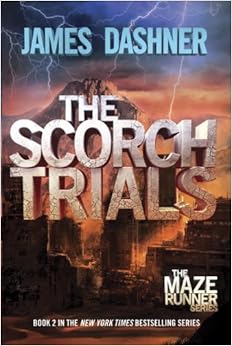
Have you ever read a book that you could connect to every single scene at every moment? Did you ever feel as if that one book was written to give you a better understanding of life and of why things happen? “The Scorch Trials” by James Dashner is the gripping sequel to The Maze Runner, it is also the perfect example of a book I could connect to, page after page. I felt as if every unexpected twist and every sorrowful scene helped me understand the importance of stories in our life. It reminds me of the many thoughts that flashed through my mind when I experienced the empathetic feelings described in this book, and I can’t help but put myself in the characters’ situation.
“The Scorch Trials” is a very compelling book that revolves around Thomas, his friends, the other surviving “gladers”, and the new characters of group B. The story is set around a deadly disease which is supposedly living in the bodies of all gladers and those from group B. Thomas and his friends go through many obstacles, such as a city full of ‘cranks’ (people with the flare who are passed the stage of mentality), in order to survive and get to the ‘safe haven’ as promised to them by the organization called WICKED. In the book, James Dashner uses many themes such as pain, regret,and confusion. There are also many moments in which many themes are used to get readers to be pensive and empathetic. This is a story filled with heart broken friendships, betrayal, and losing the ones you love. No matter how unrealistic the story plot is in reality, as human beings we can connect to many themes of this book.
Pain is felt by everyone, and it comes in all forms. However, there is one form of pain that may hit you with a mixture of feelings, at a time when you are least expecting it. Loss. Loss is all around us. Whether we lose someone by death or by heart (like the loss of a friendship), many people can empathize to the feeling it gives you. Page 26 of “The Scorch Trials” is one example where many people can connect to this feeling. In the text it states, ‘ “They killed her.” Aris said back to him. “They killed my best friend.” ’ The phrase ‘best friend’ is someone special who you can talk to and can rely on. It does not always have to be a person. It can be something that is meaningful, whether it is a person or an object, once you lose that special something you feel devastated and mournful. You can lose that person (if it were a person) due to sickness or even during an argument. Additionally, the character Aris felt as if a part of his heart was taken from him when he found out his best friend was killed, and that is how many people, who go through similar situations, may feel as well.
Recently, my grandfather passed away. After reading this book, I felt as if “The Scorch Trials” was my savior from this devastating event. I remember, like Aris, holding back my tears until the very last moment. The moment where there is a “pained beast” inside you that wants to get out, to break free. Like Aris, I too had to repeat the event multiple times, and like him, it is still the most hurtful thing that has happened to me. When I read the many scenes of this book in which the theme of pain and loss were incorporated, I felt as if there are people out there that know how I feel and what I am going through. Moreover,this is how the theme of pain in this book connects to many readers.
At one point in our life we make mistakes, we’re human, it’s what we do. And when we make the most hurtful mistakes that harm others more than we thought it would, we feel guilty. Guilt is human nature and is expressed in many ways. When you resent something, you feel the need to go through everything that you did wrong and you realize, if it were a person you put down,that they had many other problems besides the ones that you forced inside their life. It makes you realize the situation the person is going through and how much you worsened that situation. For instance, in “The Scorch Trials” there are many forms of regret, some are subtle, and others are very open. Yet, not all are easy to believe. In “The Scorch Trials”, James Dashner uses imagery in order to describe this theme of regret. “He turned just in time to see the rain start falling outside, as if the storm had finally decided to weep in shame for what it had done to them.” (138). The author uses the image of a storm finally letting out its rain as if it were a person admitting to every wrong thing he/she has done. This is significant because it makes you wonder what pure regret is. Additionally, you can connect to many things in this theme because of the many mistakes that we may make.
“The Scorch Trials” is also a book that requires you to be really pensive especially when the scene is revolved around the theme of confusion. In the book, the author wrote a scene in which Thomas is confused as to why Teresa would tell him to leave when it is clear she needs him.‘ “Get away from me, Tom,” she said. “All of you need to get...away...from me. Don’t argue. Just leave. Run.” Her neck tensed with the effort to get those last few words out…” ’ (116). The mood described in this scene is very suspenseful, which revolves around the theme of confusion. Many people can connect to this because it makes you think a lot about your self, and it makes you wonder what you would do if you were in the same situation. For example, it makes you wonder what you would do if you were Thomas and Teresa were your best friend. It makes you wonder if you would run away from someone you love, who clearly needs your help, but is not admitting it. It also make you wonder what you would do if you were Teresa, would you push your friends away when you need them most and they are willing to help? To add on, these are questions and thoughts that were in my own mind that are also connectable to many other readers.
Furthermore, “The Scorch Trials” is a book that carries people to higher extents in order to get readers to be able to connect with the themes such as pain, regret, and confusion. There are many other things that are compelling about this book and other themes that are empathetic to readers, however, those three themes are used in the most thought provoking parts in this great book. The themes reminded me that there are still many things I don’t know about the world, and that there are many people out there who are experiencing the feelings this book gave me. It makes me wonder what I would do if I were the one living through every scene of this book. It makes me want to hold my grief, my guilt, and every single piece of mystery in this world, close to me. But most of all, “The Scorch Trials” reminded me of two important things in life, it reminded me that no matter how confusing or devastating life may be ‘we must all suffer from one of two types of pain: the pain of discipline or the pain of regret. The difference is that discipline weighs ounces while regret weighs tons.’ - Sean Covey.
"Prodigy" by Marie Lu is the haunting sequel in the Legend trilogy. I think the the two biggest themes in this book are trust and honesty. Through the book June and Day have to go through many obstacles and along the way they have to find the ones who are trust worthy. Something I've noticed is that June is asked many times if she is still loyal to the Republic, which plays as another theme too. Loyalty. "Prodigy" tells you a lot about loyalty and trust. It can teach you that you have to find the ones worth being loyal too. Which adds on to the fact that you are most likely to be loyal to someone who you believe is trust worthy. Being trust worthy also means you are honest, which is something that does not relate to many characters in "Prodigy." Moreover, the two themes mentioned in the beginning comes back to this one theme, loyalty.
Another thing I've noticed is that June has a very hard time explaining how she feels. She always practical and thinks emotions hold people back. She tries hard to not to let her feelings lead her and relies mostly on her instincts. Personally, I think that's what holds her back from responding to the way Day feels about her. She's confused and I can understand that, she's not sure whether she's supporting Day because she loves him or because she feels like she owes him. Even so, through out the book it is clear what she wants, but she has no idea how to put it into words. Furthermore, "Prodigy" by Marie Lu is a book many people can stop and relate to as well as take their time to be pensive about themes that seem to show up in every chapter of this great book.